

1. Introduction
With the advancement of science and technology, marine authorities worldwide have carried out comprehensive upgrades to marine environment monitoring networks. Marine hydro-meteorological observation has transitioned from traditional manual observation to automated collection via various sensors, with centralized big-data storage and analysis. Once marine hydro-meteorological data collection is automated, the core challenge is how to transmit dispersed data in real time and reliably to a central data server for further processing and analysis.
BodaCOM addresses the practical requirements of widely dispersed marine monitoring stations, harsh offshore environments, limited power supply, and high data security demands with an industrial-grade wireless bridge-based marine monitoring communication solution. Built around the core design principles of low power consumption, high ingress protection, strong security, and ease of deployment, the solution provides stable and reliable wireless data backhaul links for marine buoys, fixed monitoring stations, mobile survey vessels, and other node types.
2. Project Overview
This project addresses the networking needs of a marine hydro-meteorological monitoring network, establishing an integrated wireless communication network covering nearshore fixed monitoring stations, buoy-based monitoring points, mobile survey vessels, and onshore data centers. The network provides unified aggregation and real-time transmission of marine monitoring data.
Node types and services carried by the network include:
• Fixed monitoring stations: real-time backhaul of hydro-meteorological sensor data (waves, tides, water temperature, salinity, wind speed/direction, etc.)
• Buoy monitoring points: low-power data collection and transmission in solar-powered environments
• Mobile survey vessels: dynamic wireless access and automatic roaming handover during navigation
• Unmanned surface vessels (USVs): real-time HD video backhaul and remote control command delivery
• Coastal watchtowers: multi-source data aggregation and forwarding to onshore data centers
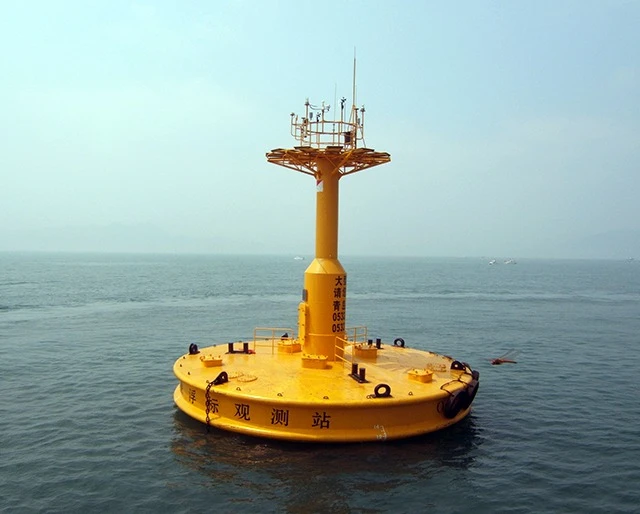
Marine Monitoring Station Facilities
3. Project Challenges
3.1 Harsh Offshore Environment
Monitoring stations operate long-term in harsh offshore environments characterized by high humidity, dense salt fog, and strong winds and waves. Equipment must feature extremely high ingress protection ratings to withstand prolonged exposure to salt corrosion and humid climatic conditions. Additionally, wide day-night temperature swings and intense UV radiation impose demanding requirements on the anti-aging performance of equipment enclosure materials.
3.2 Limited Power Supply
Most offshore monitoring points, such as buoys, rely entirely on solar power systems with limited available power. Communication equipment must employ low-power design to sustain uninterrupted 24/7 operation within the constrained power budget. Some stations have limited battery capacity, making power supply particularly tight during extended overcast and rainy periods.
3.3 Widely Dispersed Stations and Long Transmission Distances
Marine monitoring stations are distributed across different sea areas with large inter-station distances, and some stations are located tens of kilometers from the onshore data center. The core challenge of network planning is how to cover vast sea areas with a rational network topology while ensuring adequate transmission bandwidth and link reliability for each station.
3.4 Long-Term Unattended Operation
All monitoring stations operate unattended over the long term. Once equipment fails, the cost of offshore repair visits is extremely high and subject to weather and sea-state constraints. Equipment must feature extremely high stability and maintenance-free characteristics, along with support for remote status monitoring and fault diagnosis.
3.5 Data Security and Mobile Roaming
Some monitoring data carries confidentiality requirements, demanding reliable security encryption mechanisms for the wireless transmission network. Meanwhile, mobile survey vessels navigating between different base station coverage areas require automatic seamless roaming handover to ensure uninterrupted data transmission.
4. Solution
4.1 Network Architecture Design
A distributed networking architecture of "multiple onshore base stations + sector-based sea area coverage" is adopted. Multiple sets of BodaCOM base station equipment are deployed along the coastline, each covering a different sea-area zone. Fixed monitoring stations within each sea area connect to their respective onshore base stations on a proximity basis. Buoy monitoring points access the nearest base station via low-power clients.
• Fixed monitoring stations: transmit sensor data wirelessly to the designated onshore base station on a proximity basis.
• Relocatable monitoring platforms/buoys: connect to the nearest onshore base station; in ultra-long-distance scenarios, relay through adjacent fixed monitoring stations.
• Survey vessels/USVs: automatically roam between onshore base stations and fixed monitoring stations as they move away from the coastline, with the ability to hand over across multiple fixed stations during continuous navigation.
4.2 Core Design Principles
The solution strictly adheres to six design principles tailored to marine monitoring scenarios:
• Low Power Consumption: equipment optimized for solar-powered scenarios, with power consumption controlled at minimal levels to ensure 24/7 operation.
• Robustness: industrial-grade ingress protection design, adapted to harsh offshore conditions of strong winds, high humidity, and dense salt fog.
• Stability: designed for long-term unattended operation, with maintenance-free and self-recovery capabilities to ensure continuous, stable operation.
• Ease of Installation: simple equipment mounting with intuitive status indicators for judging operating state and link communication conditions.
• Security: the network employs encrypted transmission mechanisms to ensure the confidentiality and integrity of monitoring data during wireless transmission.
• Scalability: equipment reserves expansion capability, providing redundancy and upgrade headroom for future monitoring station additions.
4.3 Equipment Features
BodaCOM industrial-grade outdoor wireless bridge equipment is selected, with core features including:
• Ultra-long-range coverage, enabling vast sea-area coverage with a minimal number of base stations.
• Flexible networking supporting hybrid Point-to-Point and Point-to-MultiPoint modes.
• High stability and high bandwidth, meeting the demands of concurrent HD video and multi-sensor data transmission.
• Automatic roaming handover support, ensuring communication continuity for mobile monitoring nodes.
• Low-power design, compatible with standalone solar power systems.
5. Project Advantages
5.1 Ultra-Long-Range Coverage
Leveraging BodaCOM's proprietary long-range wireless transmission technology, a single base station can cover vast sea areas, substantially reducing the number of base stations and relay nodes required. Under open-sea line-of-sight conditions, single-hop transmission distances can reach tens of kilometers, effectively solving the coverage challenge posed by widely dispersed marine monitoring stations.
5.2 Low-Power, Maintenance-Free Design
Equipment is power-optimized specifically for solar-powered scenarios, ensuring that offshore monitoring points such as buoys can operate stably 24/7 within limited power budgets. Combined with industrial-grade ingress protection and maintenance-free design philosophy, the equipment can operate autonomously over the long term under unattended conditions, dramatically reducing the frequency and cost of offshore maintenance.
5.3 Seamless Mobile Roaming Handover
For mobile nodes such as survey vessels and USVs, the network supports automatic cross-base-station roaming handover. As vessels move away from the coastline, they can automatically switch from onshore base stations to fixed monitoring station relays, or hand over continuously across multiple fixed stations-maintaining uninterrupted communication links throughout.
5.4 Secure and Reliable Data Transmission
The network employs encrypted transmission mechanisms to ensure the confidentiality and integrity of marine monitoring data over wireless links. Equipment supports remote centralized management, enabling full-network device status monitoring, parameter configuration, and fault diagnosis from the onshore data center.
6. Case Studies
6.1 Nuclear Power Plant USV Patrol Project
Background: A nuclear power plant required the use of unmanned surface vessels (USVs) for daily patrols of the surrounding sea area to promptly detect anomalies and ensure safety. The USVs were equipped with sonar devices for fish deterrence and HD cameras for maritime video surveillance.
Implementation: BodaCOM wireless bridge equipment was deployed to enable real-time backhaul of USV camera imagery to a nearby watchtower, along with remote control of the sonar devices from the watchtower for fish deterrence. The USVs maintained stable wireless links with the watchtower throughout navigation.
Results: USV patrol imagery is transmitted in real time with clarity, and sonar remote control is responsive and reliable, effectively enhancing the efficiency and coverage of maritime security patrols around the nuclear power plant.
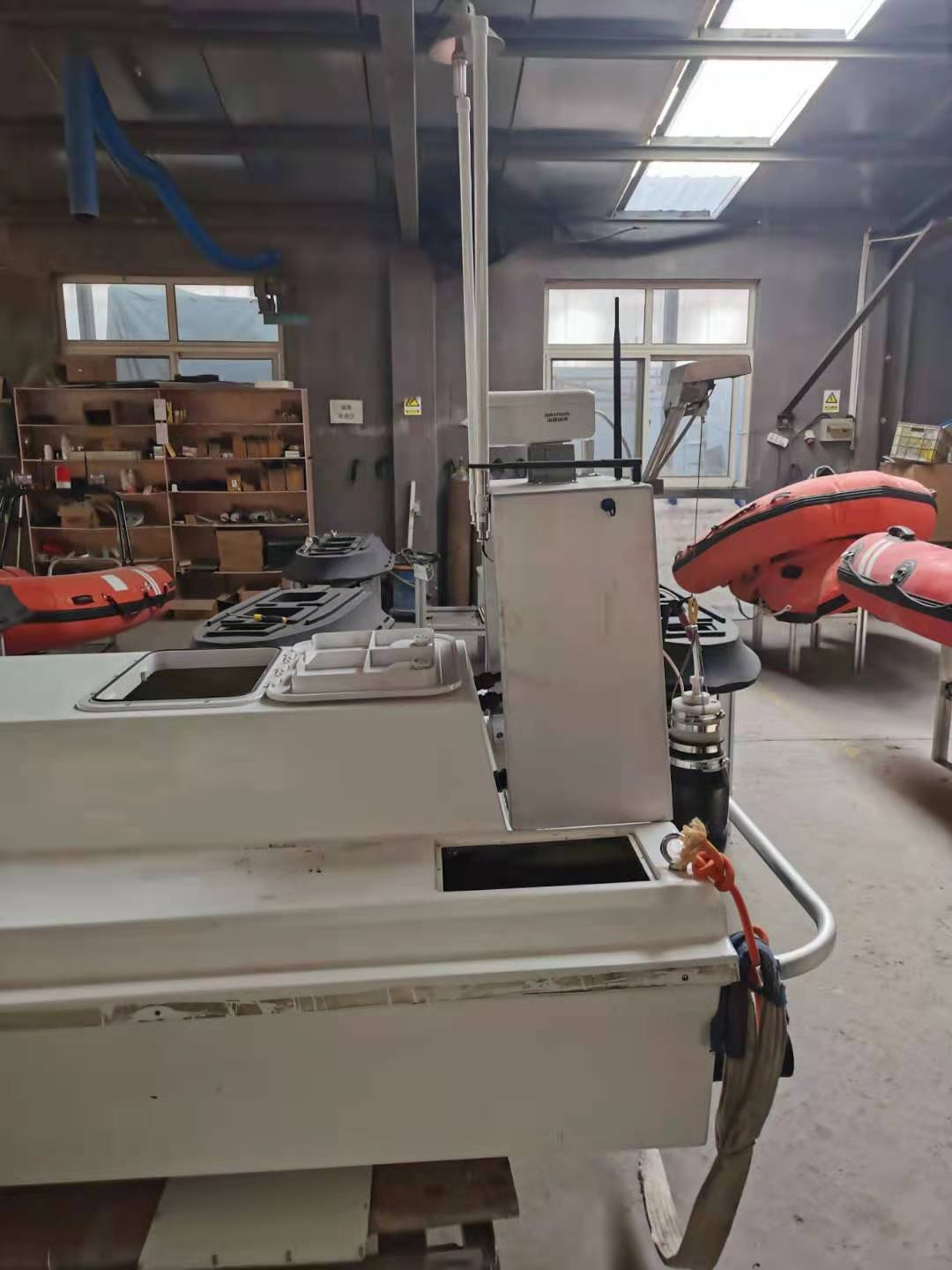
Nuclear Power Plant USV Patrol Project
6.2 Lake Environmental Protection Wireless Transmission Project
Background: A lake environmental protection monitoring project required the deployment of water quality sensors at multiple monitoring points across the lake surface, with parameters such as water temperature, pH, dissolved oxygen, and turbidity to be transmitted in real time to the environmental monitoring center. The lake area was extensive, making fiber deployment impractical.
Implementation: BodaCOM industrial-grade wireless bridges were deployed to construct a lake-surface wireless transmission network. Onshore base stations provided full lake coverage, and buoy monitoring points connected via low-power clients, with data aggregated and transmitted to the monitoring center.
Results: Real-time online monitoring of water quality parameters across the entire lake area was successfully achieved. The system operates stably and reliably, providing robust data support for lake environmental protection and pollution early warning.
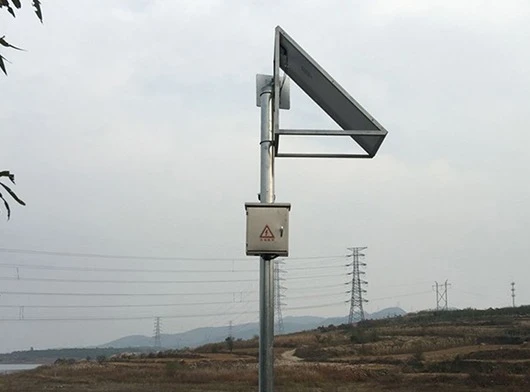
Lake Environmental Protection Wireless Transmission Project
6.3 Island Wireless Transmission Project
Background: A municipality administers multiple offshore islands requiring the deployment of marine environment monitoring equipment, with data to be backhauled to the mainland data center. Island distances vary, with some islands located far from the mainland.
Implementation: BodaCOM long-range wireless bridges were deployed to construct island-to-mainland wireless transmission links. Islands at shorter distances connected directly to onshore base stations, while remote islands relayed through neighboring islands, forming an island-chain multi-hop wireless network.
Results: Data links from all islands to the mainland were successfully established, with monitoring data backhauled in real time and with high stability. The system has operated reliably since commissioning, providing stable and efficient communication support for island marine environment monitoring.